Food Ai
Updated: Jul 1

Food, the fuel we need to survive. It consists of three primary types Proteins, Carbohydrates, et Fats (Lipides). Proteins (meat, fish, dairy) are responsible for immune function, bodily growth and repair. At the molecular level protein consists of complex molecules called polymers built from smaller chemical compounds called amino acids. Carbohydrates (bread, pasta, vegetables) are responsible for providing the human body with energy. At the molecular level carbohydrates consist of complex carbohydrates (starches, fibers) and simple carbohydrates (sugars). Complex carbohydrates (starches + fibers) consist of glucose molecules while simple carbohydrates consist of glucose, fructose et galactose molecules. Fats/Lipides (butter, cheese, oils) helps the human body with long term energy, building cells et absorbing vitamins. At the molecular level fat consists of glycerol et fatty acids (carbon + hydrogen atoms). The different types of fats include saturated fats, monosaturated fats, polyunsaturated fats, trans fats.
Ai Molecular food synthesis is a developing area of food science with Ai. This developing research, with the ability to deconstruct et reassemble food at the molecular level involves Ai machine learning models being fed millions of food recipes, flavour profiles et food molecular structures that combine to define how food exists. How food exists refers to how food exists chemically/molecularly, how food tastes (sweet, salty, bitter, unami) et how food combines either reacts with different food. With these datasets learned, machine learning models can recreate food through replicating food molecular structure by the synthesis of that food molecular structure with plant based chemical formulations. To repeat the Ai models deconstruct et reconstruct at the molecular level what plant based substitute matches a food molecularly (a foods chemical atoms e.g. carbon, H2O, oxygen, nitrogen, hydrogen), matches the food taste, matches the food smell et matches the food nutritional value.
For example, biochemists from the Chilean company Notco utilised their Ai machine learning model called Giuseppe to determine the greatest way to create a milk substitute. The Chilean biochemists with their Ai model determined that pineapple juice combined with cabbage concentrate recreated the taste, texture et smell of milk more faithfully than different plant based chemical formulations. It is imperative to add that, Ai food synthesis optimises recreating the specific nutritional value of the original food within plant based chemical formulations too. To explain this further, consider that milk provides people with their daily calcium, protein et vitamins; Ai models have ability to reassemble the macro et micronutrients within their chemically formulated substitute to guarantee the identical level of protein, calcium et vitamins are delivered by the milk substitute.
(Image below: 3D Printer)
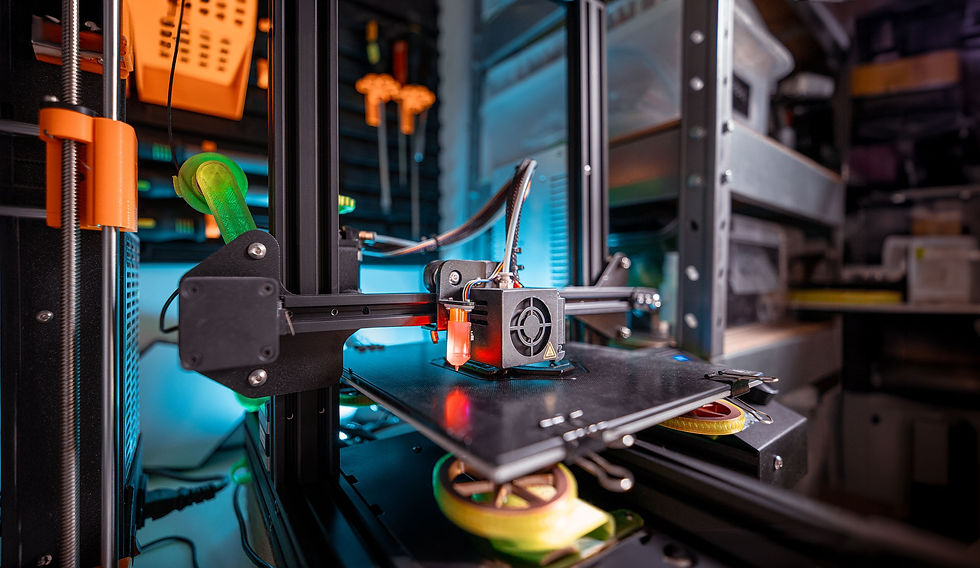
To discuss the potential of Food Ai without discussing the development of 3D printed food would reflect shortsighted assessment of maximising the constructive effect of Food Ai on state economies, food industries, et everyday life. The 3D printer is a machine that with the right raw materials installed builds three dimensional objects from digitally designed blueprint. With the right raw food ingredients a 3D printer has the ability to layer by layer recreate et prepare digital food recipes et designs that have been inputted into the 3D printer digitally. With this time, raw ingredients are installed as pastes into the 3D printer machinery, they are then temporally et quantitatively administered informed by the digital recipe/design to print the intended food three dimensionally.
I believe the optimum future potential of Ai Food has the ability to be realised with the following 2 steps. First remove the middle men between Ai food substitute algorithms to 3D Printing; the middle men being the companies that sell Ai created food substitutes. The next step is to install these Ai food substitute algorithms into 3D printer technology et have plant based ingredients, that are probably the cheapest et most readily available type of food ingredient throughout the world, installed into 3D printer technology too. After the initial price of a 3D printer has subsided the financial effectiveness implications of these two technologies combined to the average household are extreme with the tested hypothesis that every food either recipe imaginable at a supermarket can be substituted effectively by the right Ai chemically formulated plant based ingredients. To illustrate this the European Commission Eurostat Comparative Price Level Statistics stated the following price differences between different food groups with their price relativity score;
Bread & Cereals: ~105 - 110
Meat: ~115 - 120
Milk, Cheese & Eggs: ~105 – 112
Vegetables: ~98 – 102.